Building Argument Castles to Teach Line of Reasoning in AP Seminar
- historymamateach
- Sep 22, 2024
- 2 min read

Teaching students to analyze arguments effectively is a cornerstone of the AP Seminar curriculum. One innovative and engaging method to help students grasp the concept of line of reasoning is through the use of “Argument Castles.” This visual and interactive approach not only makes the learning process fun but also aids in a deeper understanding of how claims, evidence, and reasoning work together to form a cohesive argument.
What is an Argument Castle?
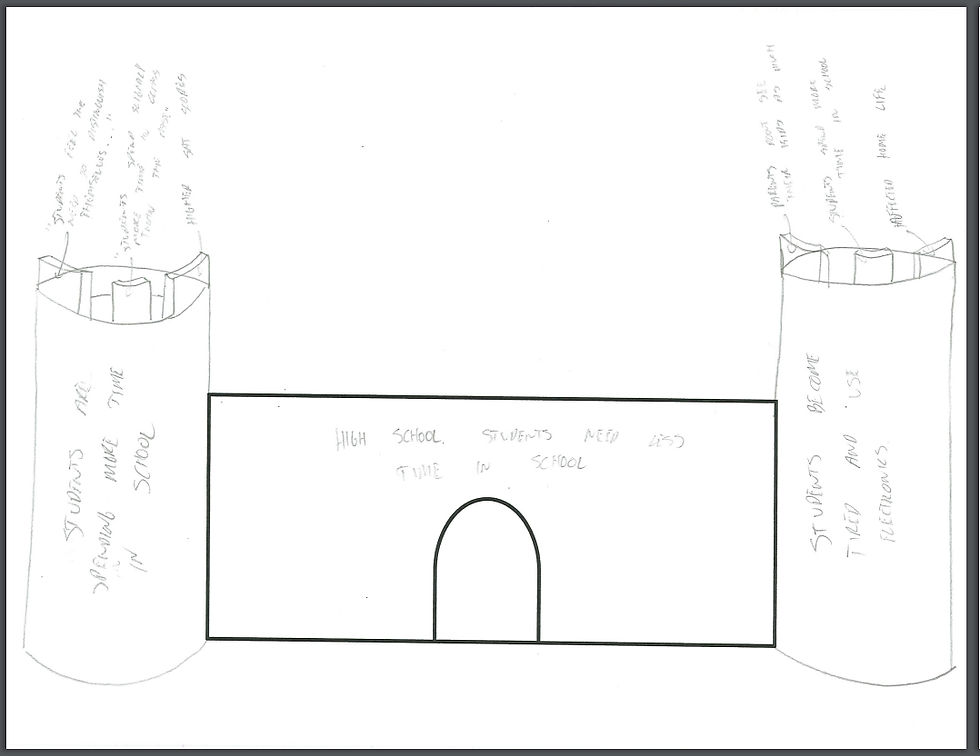
An Argument Castle is a metaphorical representation of an argument’s structure. It helps students visualize the relationship between the main claim, supporting reasons, and evidence. Here’s how it breaks down:
Claim (Center Foundation): The main point or thesis that holds the entire argument together.
Reasons (Watchtowers): The supporting points that uphold the main claim.
Evidence (Notches): The data, facts, or examples that make the reasons strong and credible.
By constructing an Argument Castle, students can see how each component supports the overall argument, making it easier to understand and analyze the line of reasoning.
The Importance of Visualization
Visualization is a powerful tool in education, especially when teaching complex concepts like argument analysis. Here’s why visualization is crucial when building this particular skill with students:
Enhances Comprehension:
Visual aids help students better understand abstract concepts by providing a concrete representation. The Argument Castle metaphor makes the structure of an argument tangible and easier to grasp.
Improves Retention:
Studies have shown that visual learning can significantly improve information retention. When students draw and visualize Argument Castles, they are more likely to remember the components and their relationships.
Engages Multiple Learning Styles:
Not all students learn the same way. Visual learners, in particular, benefit from seeing information presented graphically. Argument Castles cater to these learners by providing a visual framework for understanding arguments.
Encourages Active Learning:
Building Argument Castles is an interactive process that requires students to actively engage with the material. This hands-on approach promotes deeper learning and critical thinking.
Simplifies Complex Information:
Breaking down an argument into visual components helps simplify complex information. Students can see how claims, reasons, and evidence fit together, making it easier to analyze and evaluate the argument.
Facilitates Discussion and Collaboration:
Visual tools like Argument Castles can serve as a focal point for class discussions and group work. Students can compare and contrast their castles, discuss different interpretations, and collaboratively refine their understanding.

Using Argument Castles in your AP Seminar classroom can transform the way students understand and analyze arguments. This method not only makes the learning process more engaging but also provides a clear and structured way to visualize the line of reasoning. By incorporating this technique into your lessons, you can help your students develop critical thinking skills and a deeper understanding of how arguments are constructed.
Give Argument Castles a try in your next lesson and watch your students’ analytical skills soar!


Comments